Last modified: 2026-11-07 17:02:12
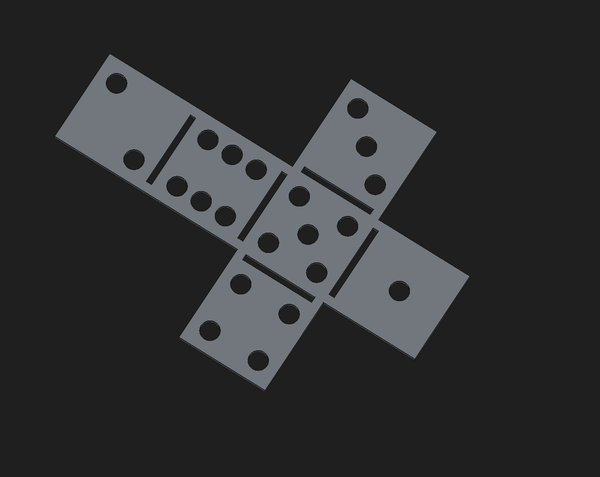
< 2026-11-06 2026-11-08 >Here's a net I made for a die:
Intended to be bent up and maybe welded.
OK! Great success today! The machine works!
The slag is reasonably easy to break off? It's not as robust as actual steel but still kind of hard. I can get some of it off by hitting it really hard with a hammer and it crumbles away, some of it needs angle grinding.
I had a look at the electrode and nozzle and there is some exposed copper which is consistent with the arc turning green yesterday but honestly doesn't look that bad. I think the fuse blew just because the plug was overloaded by compressor and plasma on same plug.
I cut out a new heart, this time with 2.0 second pierce and 500 mm/min and it worked perfectly!
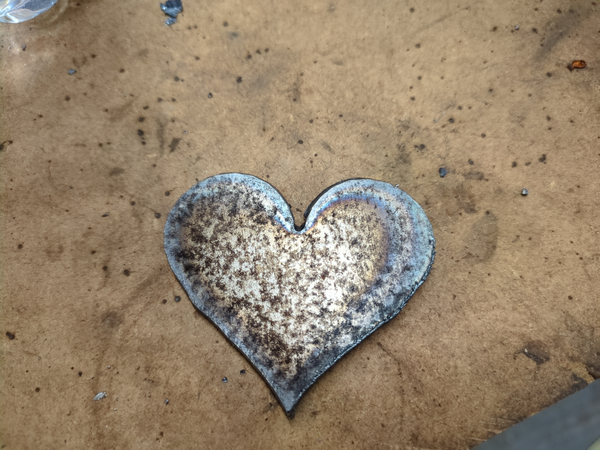
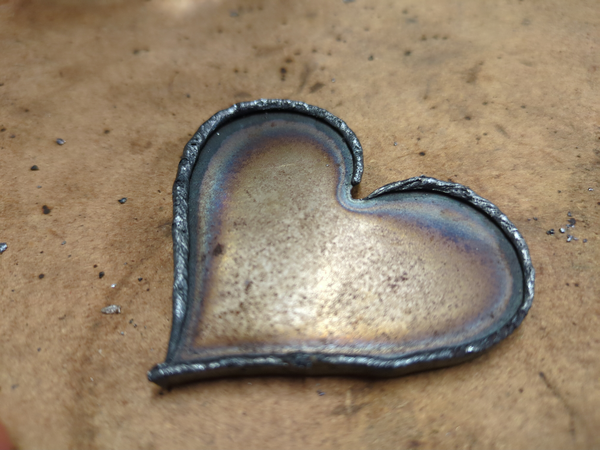
Cleaned up a bit:
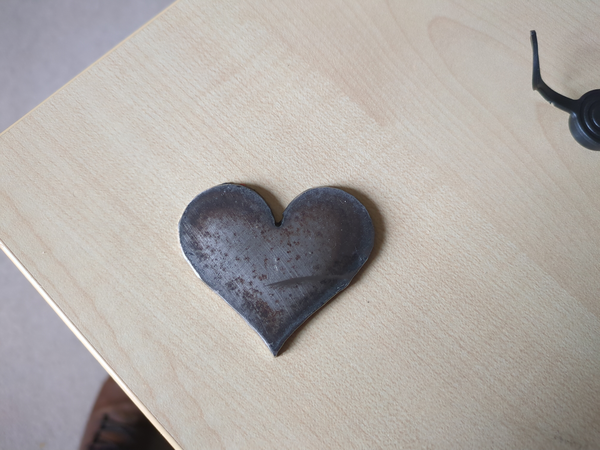
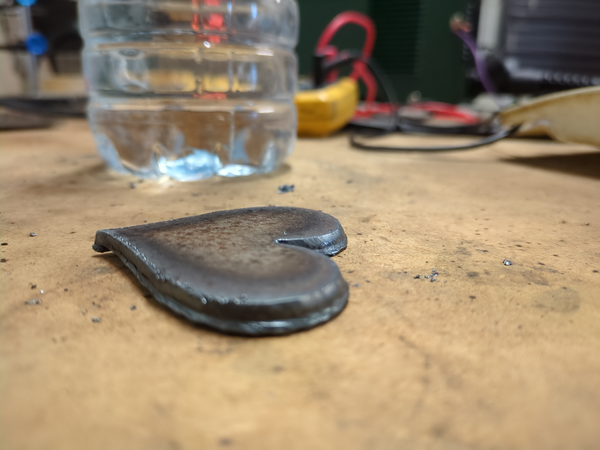
Cuts along the Y axis are pretty much square:
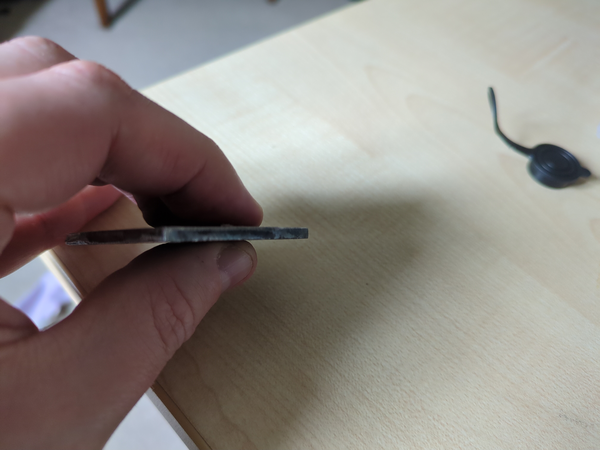
But cuts along the X axis are bevelled:
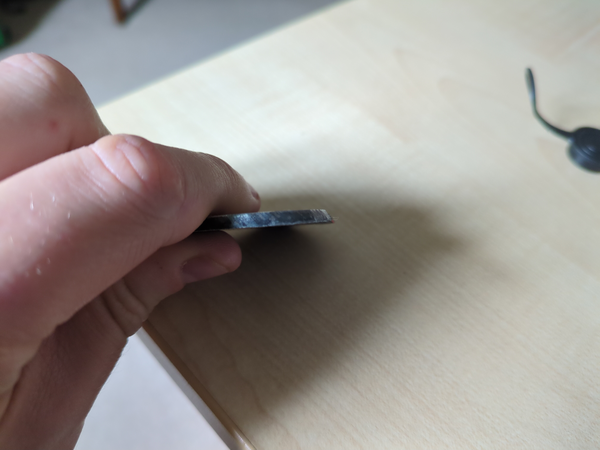
I am thinking that if the new consumables don't solve the bevel then I can just angle the torch clamp to correct for it, as long as it is consistent, no big deal, I don't really care.
And sprayed gold:
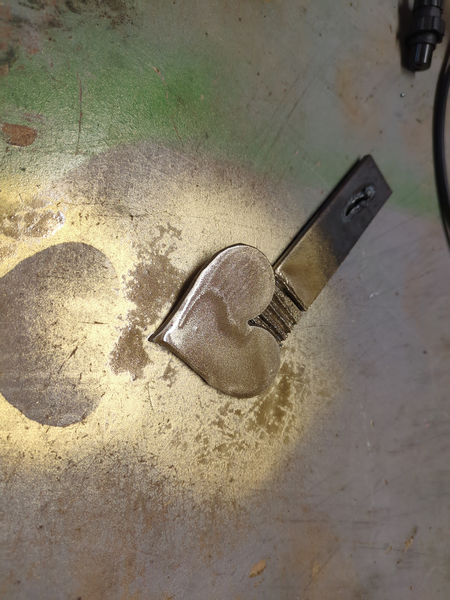
Planning to glue a magnet on the back and put it on the fridge.
I will hold off on making the die until I have sorted out the bevel, but now Emma is looking for a little picture frame for an Instax photo so let's make one.
I am going to plasma cut a steel outer and paint it probably gold, and then maybe just hold the picture in with cardboard and tape. It only needs to lean against something.
CAD:

Now some CAM, first time doing this for plasma cutter. I guess just treat it like a milling cutter with a 2mm tool?
And maybe manually add a pierce delay?
Inside first, with lead in/out dressups. Apparently it is better if you either climb or conventional cut, depending on the direction of the swirl, not sure it makes much difference in my case though.
And I will try 600 mm/min.
Also need to manually add code to turn torch off during travel moves!
I didn't have a big enough piece of 3mm steel so used a piece of 4mm. This is hot-rolled and the 3mm was cold-rolled, in case that makes a difference, although the 3mm was also rusty and this is not.
OK so a few errors here. It tripped the 16A breaker a couple of times (did not blow the fuse). I may want to get higher-current wiring in the garage because the welder has done this a few times as well. It's much more annoying in CNC than with the welder because you need to resume your job that's half done.
But I did that.
Bevel is much worse on 4mm steel.
I had to reduce it to 200 mm/min before it would reliably cut all the way through and even then it turned out not to be that reliable. And was using 4.0 second pierce delay.
Example of cutting too fast:
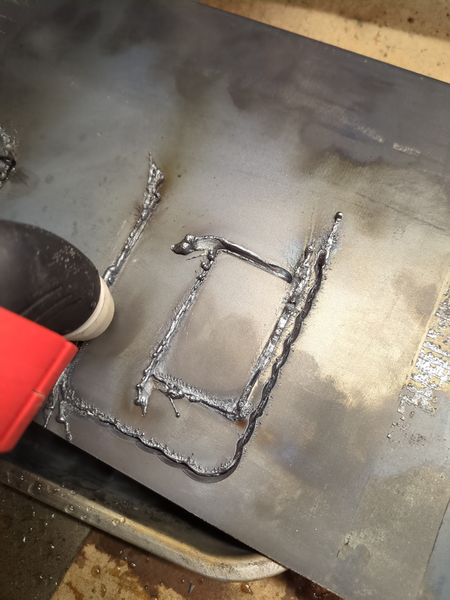
The raised up slag meant the torch nozzle hit the work and dragged it around and misaligned it.
Completed cut:
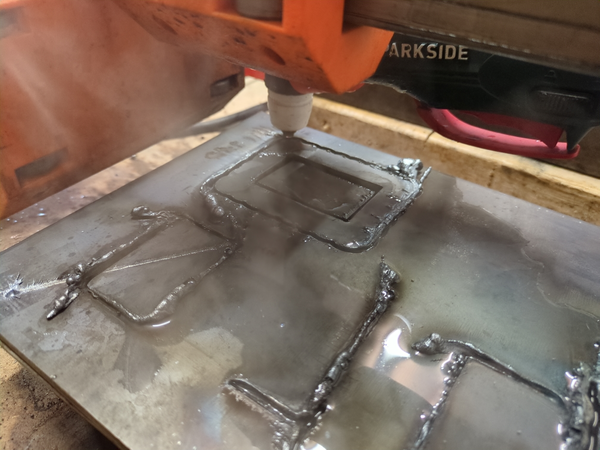
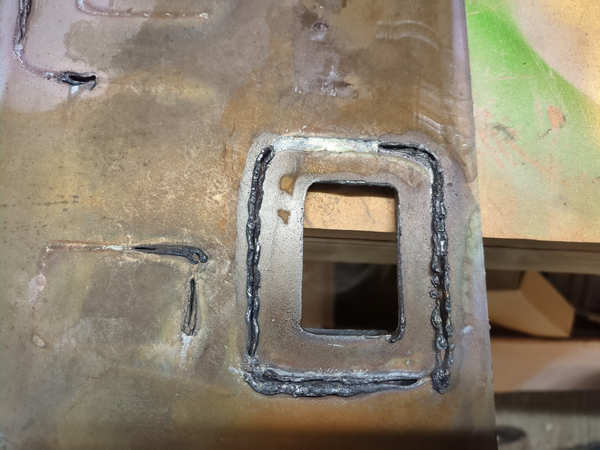
That's with 2 resumptions after tripping the breaker.
The central rectangle knocked out easily with 1 hammer blow, the outer profile needed some angle-grinding.
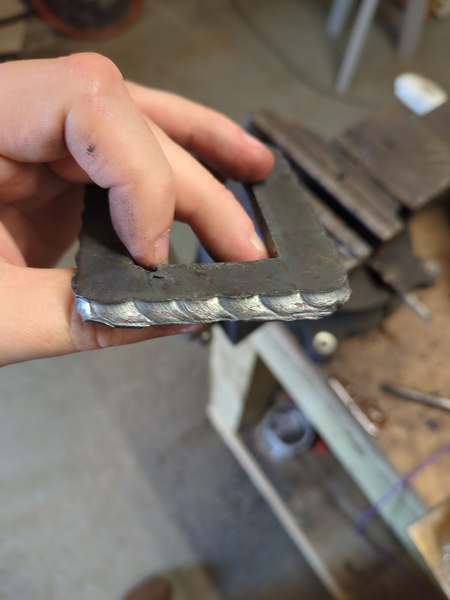
You can see on the wavy edge how badly the plasma arc is not keeping up. It is several mm further behind at the bottom of the cut than at the top:
I used the flappy wheel to smooth the rough edges and then sprayed it gold. We will use this picture frame but it obviously totally sucks.
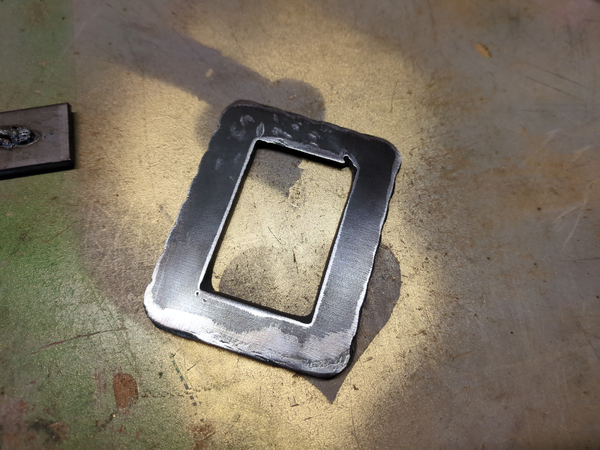
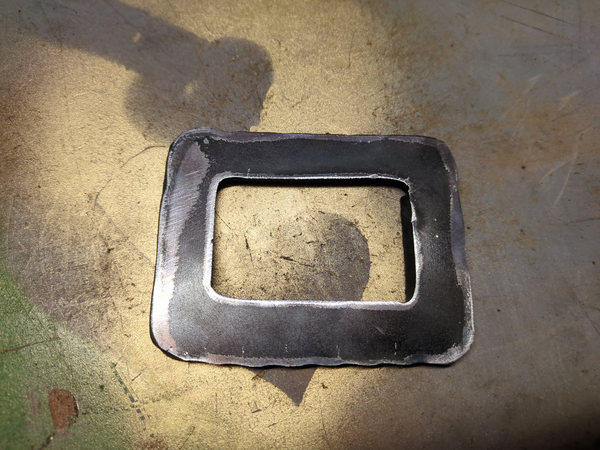
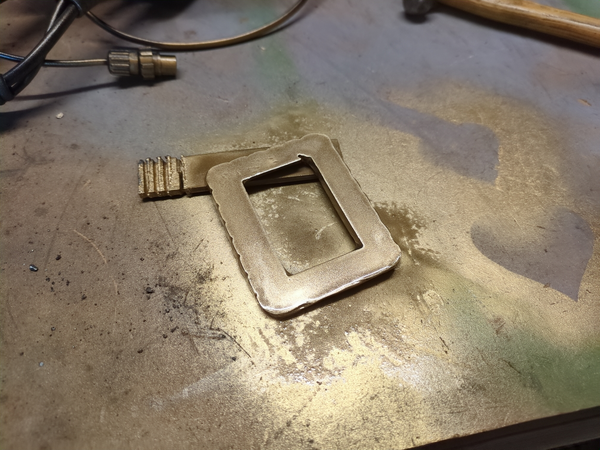
Interestingly, where it looks like the lead-in has been on the wrong side of the part, that is actually not what happened. There was no lead-in (despite my original plan), and that's actually the top surface. Seems like after the pierce the arc is deflecting away and causing the bevel but the deflection begins at the top instead of the bottom?
If the torch is slightly out of square could it be that the arc preferentially goes to the side of the nozzle that is closest to the work but then drifts back towards centre as it gets further away??
Maybe making the torch clamp angle adjustable is worthwhile, this problem may go away.
And also if it is cutting a bevel it is effectively cutting like 50% more thickness so squaring up the cut may make it cut better as well.
< 2026-11-06 2026-11-08 >